Best Tires for Ford F-150 2020 (For Smooth Driving & Less Vibration)
If Your F-150 Still Feels Slightly Off at Highway Speeds
At this point, you might be coming from two different places.
Maybe you’ve already been trying to fix a vibration issue—checking balance, looking at brakes, even replacing shocks—and the truck still doesn’t feel completely smooth.
Or maybe you’re just starting out, searching for the best tires for your Ford F-150, and trying to understand what actually makes a difference at highway speeds.
Either way, this is an important piece of the puzzle.
Because if your truck still feels slightly off—even after addressing the usual suspects—there’s a good chance the issue is coming from somewhere much simpler than expected.
And in many cases, that “somewhere” is the tires.
This also connects directly back to the main guide: “Ford F-150 2020 Shaking at 60 MPH? Real Causes & Fixes That Actually Work”
That article helps you understand why the issue starts.
This section focuses on something more specific: Why tires are often the point where the problem actually begins—and sometimes, where it needs to be fully solved.
Why Tires Play a Bigger Role Than Most People Expect
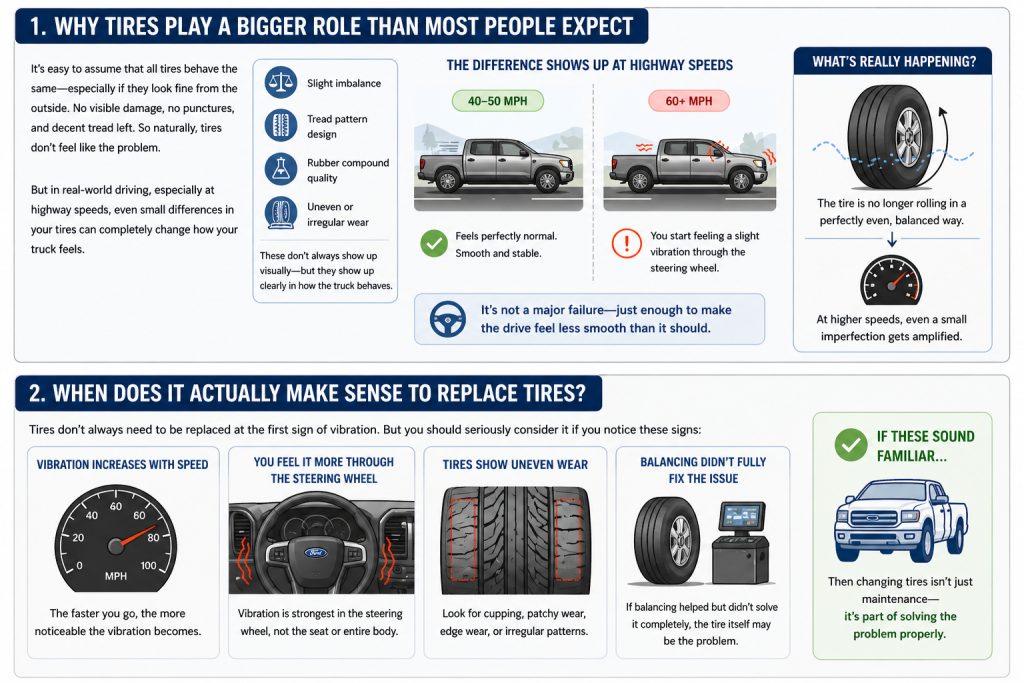
It’s very easy to assume that all tires behave more or less the same, especially when they appear to be in good condition from the outside. There’s no visible damage, no punctures, and the tread still looks decent, so naturally, tires don’t feel like the source of the problem.
However, real-world driving—particularly at highway speeds—tells a very different story. Even small differences in factors such as slight imbalance, tread pattern design, rubber compound quality, or uneven wear can significantly influence how your truck feels on the road. These are not always issues you can easily spot by just looking at the tire, but they become quite noticeable once you start driving at higher speeds.
For example, a tire may feel perfectly fine at around 40 to 50 mph, giving you no indication that anything is wrong. But as soon as you cross 60 mph, you may begin to notice a slight vibration coming through the steering wheel. It’s not something extreme or alarming, but just enough to make the overall driving experience feel less smooth than it should be.
This is exactly where things start to get confusing for most people, because it doesn’t feel like a clear mechanical failure. Instead, it creates a subtle sense that something is not quite right.
In reality, what’s happening is fairly straightforward—the tire is no longer rolling in a perfectly even and balanced manner. And at higher speeds, even the smallest imperfection tends to get amplified, making it much more noticeable than it would be during slower driving conditions.
When Does It Actually Make Sense to Replace Tires?
Now before jumping straight into buying new tires, it’s worth being clear about when they are actually the root cause.
Because not every vibration automatically means replacement.
But based on how these issues typically show up, tires become a likely culprit when:
- The vibration increases as speed goes up
- You feel it more through the steering wheel than the seat
- There are visible signs of uneven wear (cupping, patches, edge wear)
- Wheel balancing improved things—but didn’t fully solve the issue
If that sounds familiar, then this isn’t just a maintenance decision anymore.
It becomes part of solving the problem properly.
And for those starting fresh—looking for the right tires from the beginning—this is exactly why tire choice matters more than it seems.
Because the difference between an average tire and a well-matched one isn’t just durability or grip. It’s how stable, smooth, and confidence-inspiring your truck feels every single time you hit highway speed.
Best Tires for Ford F-150 2020 (For Smooth Highway Driving & Less Vibration)
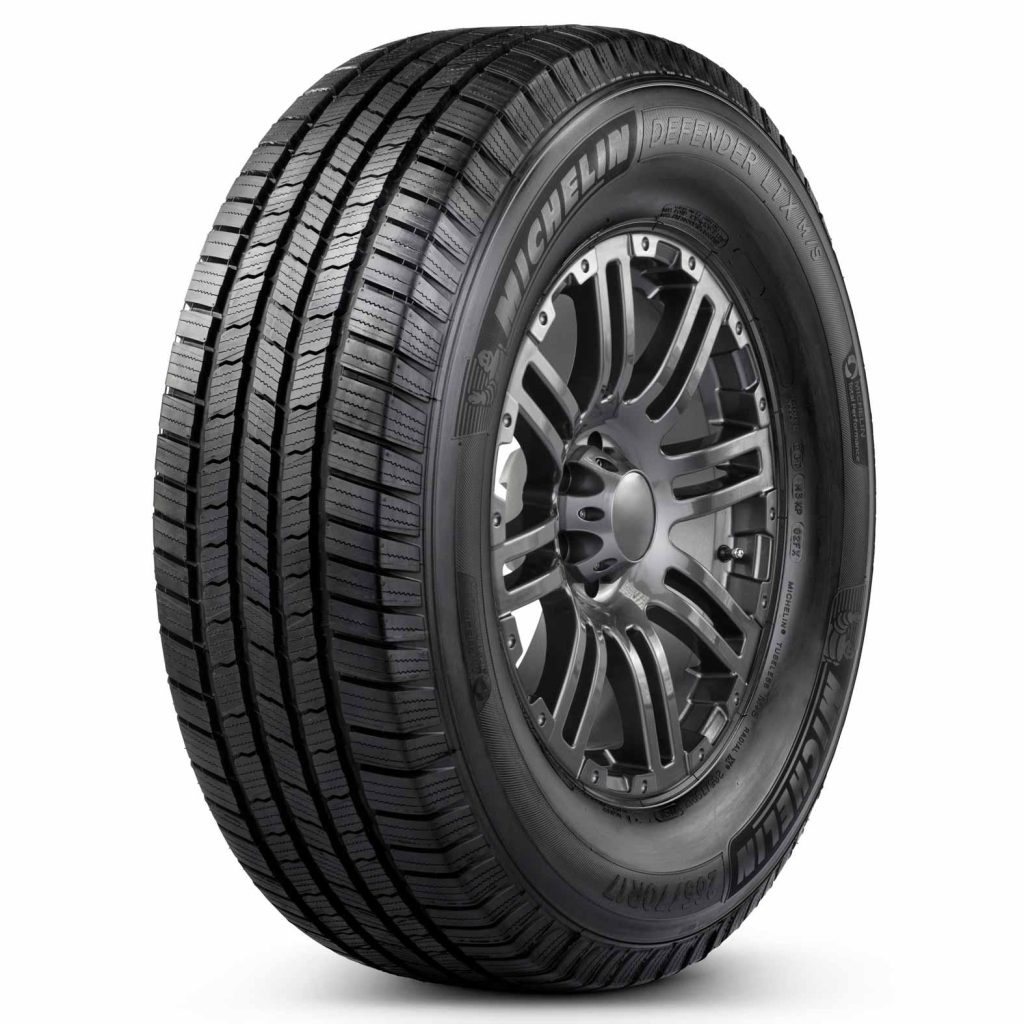
1. Michelin Defender LTX M/S (Best for Smooth Highway Ride & Least Vibration)
If your main concern is that slight vibration or roughness you feel at highway speeds — especially around that 55–70 mph range — this is where something like the Michelin Defender LTX starts to stand out immediately.
What makes this tire different from more aggressive or cheaper options is how consistently it rolls at speed. The tread design is built to maintain even road contact, and the rubber compound is optimized to reduce small irregularities that normally turn into vibration. That matters because most highway vibration doesn’t come from big issues — it comes from tiny inconsistencies repeating over time.
When can you go for Michelin Defender Tires
This tire really starts to make sense when your driving is mostly on clean roads — especially highways — and your main concern is that subtle roughness or vibration that shows up at speed.
If your truck feels fine at lower speeds but starts to feel slightly unsettled around 60 mph, this is exactly the kind of scenario where a highway-focused tire like this works best.
It’s not built for aggressive terrain or off-road use, and that’s actually the advantage here. Because instead of trying to do everything, it focuses on doing one thing extremely well — rolling smoothly and consistently over long distances. So if your goal is to make your F-150 feel calm, stable, and comfortable again, this type of tire fits that use perfectly.
How It Helps With Vibration
Instead of transmitting small road imperfections into the steering or cabin, this tire absorbs and smooths them out. That reduces the kind of high-speed vibration that often gets mistaken for suspension or brake issues.
In simple terms: It doesn’t fight vibration — it prevents it from forming in the first place.
What you’ll notice after installing these tires
The difference usually shows up in how relaxed the truck feels on the highway.
Instead of constantly making small steering corrections or noticing a faint vibration through the wheel, the truck feels more settled and predictable. Long drives become less tiring, road noise reduces slightly, and the overall driving experience feels smoother without you actively thinking about it.
It’s not a dramatic transformation — it’s more like everything becomes quieter, calmer, and easier to manage.
Final Take
If your truck feels slightly rough but not unstable, this is the most direct and effective way to fix that.
It’s not about grip or performance —it’s about making your truck feel effortless and smooth again.
Check compatibility : Ford F150 2020 Michelin Defender LTX M/S tires
2. Goodyear Wrangler All-Terrain Adventure (Best for Mixed Roads but Slight Trade-off in Smoothness)
Now, if your driving isn’t limited to clean highways and you often deal with rough roads, patches, or even light off-road conditions, this is where something like the Goodyear Wrangler starts to make more sense.
But here’s the important thing — this tire is built differently, and that directly affects how it behaves.
The tread pattern is more aggressive, which improves grip and durability on uneven surfaces. However, that same aggressiveness means it doesn’t roll as smoothly as highway-focused tires like Michelin.
Where This Actually Makes More Sense
This tire starts to make sense when your driving conditions are not perfect — and that’s the reality for a lot of truck owners.
If you’re regularly dealing with uneven roads, construction patches, gravel, or occasional off-road conditions, then a highway-only tire may feel too soft or vulnerable. That’s where something like this becomes a better fit, because it’s built to handle variation rather than optimize for smoothness alone.
So if your concern is not just vibration, but also how the truck behaves when the road isn’t ideal, this tire aligns better with that usage.
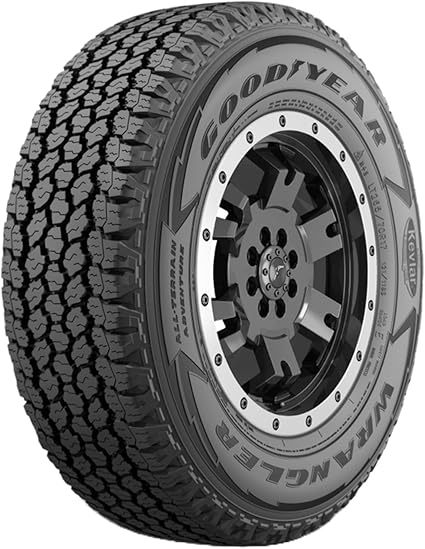
How It Helps (and Where It Doesn’t)
On rough or uneven surfaces, this tire actually improves stability quite a bit.
The more aggressive tread pattern gives better grip, which helps the truck stay composed instead of feeling loose or unsettled. That added grip can reduce the kind of instability that sometimes gets interpreted as vibration on bad roads.
But on smooth highways, the story is slightly different.
Because the tread is more aggressive, it doesn’t roll as cleanly as a highway tire. So while it improves stability on rough surfaces, it may not eliminate highway vibration as effectively as something like Michelin.
What You’ll Notice After Installing
The biggest difference shows up when the road quality changes.
On uneven or rough roads, the truck feels more confident and controlled, and you don’t get that uneasy or unstable feeling. The trade-off is that on highways, the ride feels slightly firmer, and you may notice a bit more road feedback compared to smoother tires.
Overall, it feels more durable and capable — just not as refined.
Final Take
If your roads are not perfect, this is a more practical choice.
It won’t be the smoothest option —but it will make your truck feel more stable where it matters.
Check compatibility : Ford F150 2020 Goodyear Wrangler All-Terrain Adventure tires
3. Continental TerrainContact H/T (Best Balance Between Smoothness & Stability)
If you’re not fully in the “highway only” category and not fully in “all-terrain” either, this is where Continental TerrainContact starts to feel like a very well-balanced option.
It doesn’t go to extremes. Instead, it focuses on delivering:
- stable highway behavior
- consistent grip
- and controlled ride feel
What makes it different is how it balances tread design — not too aggressive, not too soft — which allows it to maintain smoother rolling than all-terrain tires while still offering better grip than pure highway tires.
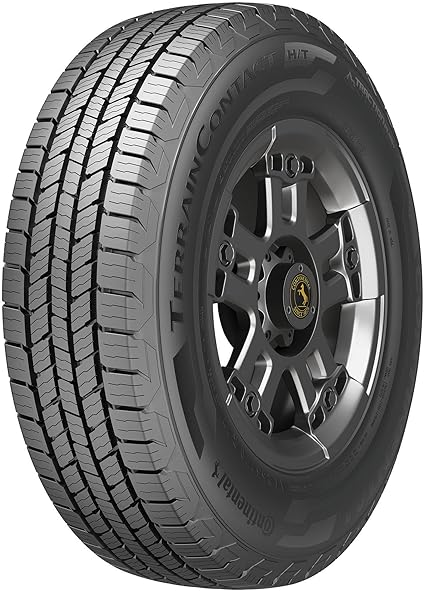
Where This Actually Makes More Sense
This is the kind of tire that fits when your usage doesn’t clearly fall into one category.
If you’re doing a mix of daily driving, highway runs, and occasional rough patches, and you don’t want to over-optimize for one condition, this is where a balanced option like this becomes the most practical.
It doesn’t go as soft as a highway tire or as aggressive as an all-terrain — and that’s exactly what makes it useful for most real-world scenarios.
How It Helps With Vibration
Because the tread design sits between comfort and grip, it helps maintain consistent road contact without introducing too much aggressiveness.
That means it reduces uneven rolling — which is one of the main causes of vibration — while still giving enough grip to keep the truck stable on slightly rough surfaces.
So instead of specializing, it smooths out the overall driving experience.
What You’ll Notice After Installing
The difference here is not extreme in any one direction — it’s more about overall balance.
The truck feels stable at speed, the ride feels controlled without being stiff, and you don’t notice sudden changes in behavior between different road conditions.
It’s the kind of setup where everything just feels “right” across most situations, without needing to think too much about it.
Final Take
If you don’t want to overthink and just need something reliable across all conditions, this is one of the safest choices.
It doesn’t specialize —it simply makes your truck feel stable, smooth, and predictable overall.
Check compatibility : Ford F150 2020 Continental TerrianContact H/T tires
Final Thought — What Actually Makes Sense for Your Truck
If you’ve made it this far, you’ve probably realized that the slight vibration or roughness in your Ford F-150 isn’t always coming from one major issue.
Most of the time, it’s a combination of small factors — and tires are often where it begins.
If you’re landing on this article for the first time, the simplest way to approach this is to match the tire to how you actually use your truck.
If your driving is mostly on highways and your goal is to get rid of that slight roughness or vibration at speed, then something like the Michelin Defender LTX tends to make the most sense, because it focuses on smooth, consistent rolling and reduces the kind of small irregularities that build into vibration over time.
If your driving conditions are more mixed — a bit of highway, some rough roads, maybe occasional uneven terrain — then a tire like the Goodyear Wrangler All-Terrain feels more practical. It may not be the smoothest on highways, but it gives you better stability and confidence when the road isn’t perfect.
And if you’re somewhere in between — not fully highway-focused and not fully off-road either — then the Continental TerrainContact H/T usually ends up being the most balanced choice. It doesn’t specialize in one extreme, but it gives you a consistent, stable feel across most everyday situations.
At the same time, it’s important to look at this as part of a bigger picture.
If you’ve already gone through:
- Fixing vibration basics
- Checking brake behavior
- Improving suspension control
then this article is simply helping you complete that process.
That’s why it connects directly with:
- Our main guide on Ford F-150 2020 shaking at 60 MPH
- The how to fix vibration on Ford F150 article
- And deeper dives into best brake pads, brake kits, and shocks
Each one solves a different part of the same problem.
In the end, there isn’t one “best tire” for everyone.
But there is a best tire for your situation.
And once you match that correctly, the difference isn’t just less vibration.
It’s a truck that feels smooth, stable, and properly sorted again — without constantly trying to figure out what’s still wrong.

Vicky Dwaj, Founder and CEO of TrucksEnthusiasts , is an automobile engineer passionate about pickup trucks and accessories. Follow his journey to discover the latest trends in off-road accessories, cars, and truck parts.